
The Treasure Trove of Luc Yen: Vietnam’s Gemstone Capital
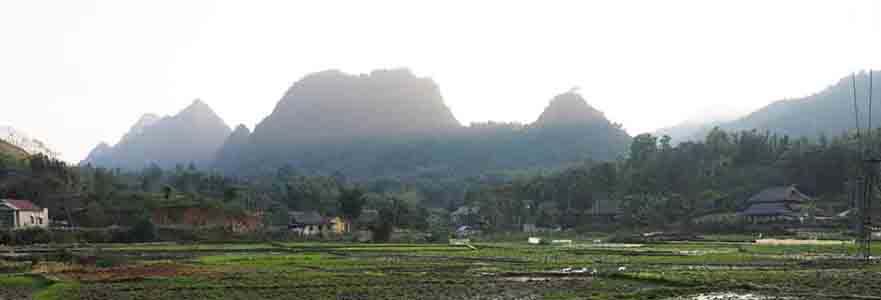
The Luc Yen district in Vietnam’s Yen Bai province has emerged as one of Southeast Asia’s most significant sources of high-quality colored gemstones, particularly ruby and spinel. Discovered in 1987, the region’s deposits have transformed the mountainous area into a vibrant hub for the global gemstone trade.
The Geology of Gemstone Formation
The geological context of the Luc Yen gem deposits is critical to their high quality. The stones are found within a metasedimentary sequence of Cambrian age, specifically within marble and schist in the Lo Gam tectonic zone, part of the larger Red River shear zone.
Primary Deposits: Gemstones like ruby are found as disseminated crystals within the marble host rock, often associated with minerals such as phlogopite, dravite, and graphite. Spinel crystals, known for their striking colors, also occur in dolomitic marble in metasomatic zones. Primary mining involves quarrying the marble and often requires blasting, as seen in areas like May Ha and May Thuong mines.
Secondary Deposits (Placers): The most accessible and historically significant mining occurs in the placer deposits. These are alluvial and colluvial gravels found in karst pockets and alluvial fans in the Luc Yen valleys, where rubies, sapphires, and spinels have been naturally freed from the host rock by erosion. Notable placer locations include Tan Huong and Truc Lau.
⛏️ Artisanal and Small-Scale Mining Practices
Gemstone mining in Vietnam operates under a unique blend of official regulations and pervasive artisanal practices. While the government has established a Mineral Law and, at times, involved state-owned corporations, much of the actual extraction remains small-scale, carried out by local cooperatives and families.
Informal Extraction: The text highlights that small-scale mining is “basically illegal” but tolerated, especially when miners operate between rice crops or claim to be digging fish or duck ponds. This demonstrates the local economic reliance on the industry and the government’s practical leniency toward small operators.
Traditional Methods: These miners often rely on traditional, low-tech methods, including basic tools like shovels and buckets, particularly when recovering material from old, large-scale mining sites or in the alluvial deposits. This labor-intensive work provides essential livelihoods in rural areas where alternative employment is scarce.
Technological Shift: While many operations remain traditional, more modern techniques, such as the use of power generators, drilling machines, and blasting, are employed to extract gems from the primary marble deposits.
🎨 The Significance of Luc Yen’s Gems

The Luc Yen area is internationally renowned for producing exceptional gems with distinct characteristics:
Rubies: Celebrated for their vivid color and high transparency, Luc Yen rubies often exhibit a rich color that rivals fine stones from other world sources. They are typically marble-hosted rubies and display characteristics such as strong fluorescence.
Spinel: Luc Yen is perhaps most famous for its variety of spinels, which includes fine red, pink, and purple hues. Most notably, the region is a leading source of the extremely rare and highly-coveted Cobalt Blue Spinel, which is valued for its vivid, vibrant color.
Other Gems: The area also produces other high-quality stones, including sapphires (in various colors), tourmaline, aquamarine, garnet, and topaz, adding to the district’s diversity.
🛍️ The Luc Yen Gem Market: A Trading Hub

A Daily Phenomenon: The market is an extraordinary, informal, open-air spectacle that typically convenes early in the morning—often starting around 6:30 AM and wrapping up by 10:00 AM.
The Trade: Here, local miners, small traders, and international buyers gather to negotiate the sale of both rough and cut stones. The informal setting, where gems are casually displayed on simple tables or cloths, contrasts sharply with the high-value materials being traded. The market not only facilitates the sale of precious stones but also supplies materials for the local industry of gemstone painting, a unique craft in the area.
Economic Impact: The mining and subsequent market activities drive the local economy, providing incomes and fostering secondary employment in cutting, polishing, and jewelry manufacturing. This trade has established Luc Yen as Vietnam’s most important gemstone-trading center.
The continued operation of this vital, informal, yet globally significant gemstone industry highlights the geological richness of Luc Yen and the deep-rooted cultural and economic significance of gem mining to the local communities.
Here is a look into the mining and market in the region: Gem mines and market – A visit to the Luc Yên district in Vietnam.
Join us in visiting the mines of Luc Yen Vietnam