
The Colored Gemstone Gold Rush: Prices Soar, Record Discoveries Emerge, and Ethical Sourcing Takes Center Stage in 2026
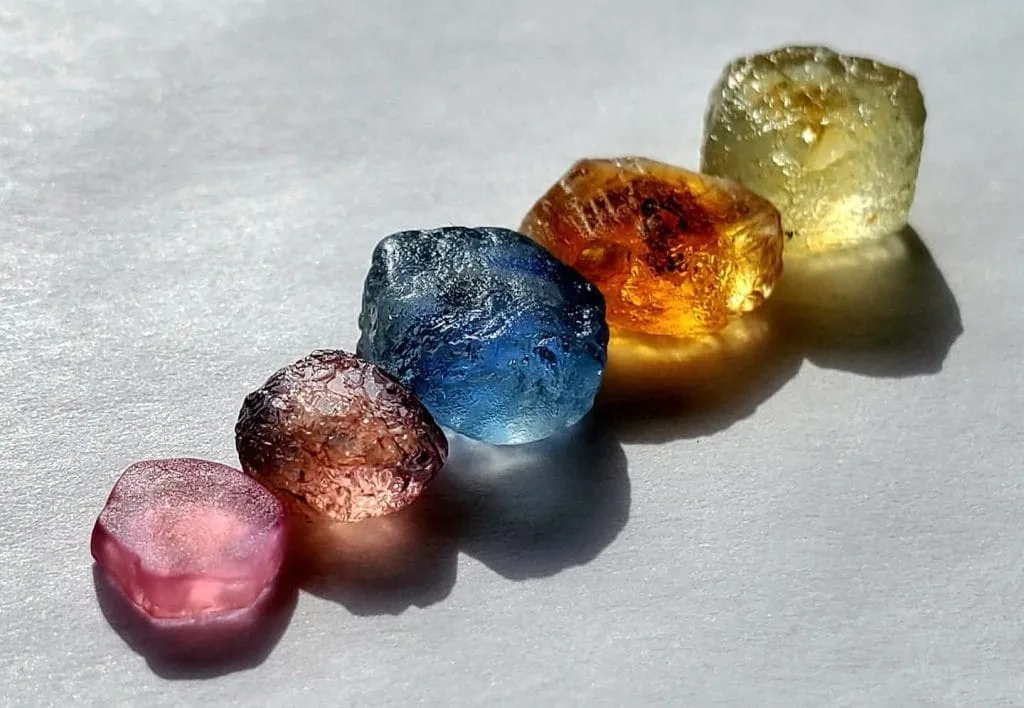
The global gemstone market is experiencing a profound shift, defined by dramatic price appreciation, monumental new discoveries, and a consumer-driven push for greater ethical transparency. Far from being relegated to dusty vaults, high-quality colored gemstones—especially the “Big Three” of rubies, emeralds, and sapphires—are making headlines as luxury assets, investment vehicles, and statement pieces in modern jewelry.
This in-depth article explores the top trends, major challenges, and most significant news driving the gemstone industry in 2025, providing crucial insights for investors, jewelers, and enthusiasts alike.
📈 Market & Industry Trends: High-Value Growth and Key Sector Drivers
The global gemstone market is poised for significant expansion, with projections suggesting it could reach a valuation of $45 billion to $52.67 billion by 2031-2032 (Persistence Market Research, Grand View Research). This growth is fueled by both traditional luxury demand and surprising adoption in high-tech industrial sectors.
The Big Three: Dramatic Price Increases in Luxury Gemstones
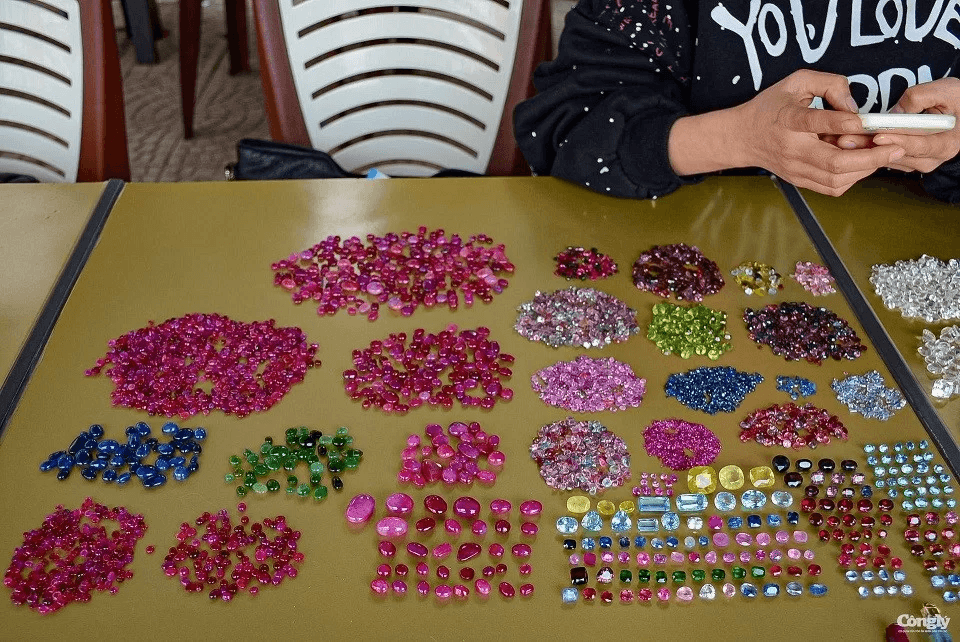
One of the most compelling narratives in the 2025 market is the soaring value of high-end rubies, emeralds, and sapphires.
Key Insight: Fine, investment-grade stones are seeing a dramatic price rise, confirmed by expert analysis from labs like GemResearch Swisslab AG.
Why the Spike? The scarcity of truly exceptional, high-carat, and vividly colored natural gems—especially those that are unheated or minimally treated and possess a prestigious origin (like Burmese rubies or Kashmir sapphires)—is driving a fierce competition among collectors and investors. In a volatile economic climate, these precious colored gemstones are increasingly viewed as a robust, tangible store of wealth.
SEO Focus Keywords:
ruby price increase 2025
emerald investment value
high quality sapphire cost per carat
precious colored gemstones market analysis
The Dual Engine of Market Growth
While jewelry remains the emotional heart of the industry, industrial applications are a key driver of the projected global gemstone market growth:
Luxury Jewelry Demand: Rising affluence in emerging markets, coupled with a renewed focus on unique, personalized luxury items, ensures continuous demand for all gemstones.
Industrial Adoption: Gemstone materials are critical in high-tech sectors, including information technology and telecommunications. This industrial usage provides a stable, long-term foundation for market expansion, especially for synthetic and industrial-grade stones.
The Rise of the Colored Gemstone Engagement Ring
A significant cultural shift is taking place in the bridal sector, pushing gemstone engagement rings into the mainstream.
Trend Spotlight: Couples are increasingly choosing bold, personal statement rings over the traditional diamond solitaire, favoring the rich color and unique symbolism of sapphires, emeralds, and rubies.
Popular Styles: Trends like the East-West setting and designs with hidden halos or asymmetrical elements are providing fresh, modern interpretations for these classic gems.
SEO Focus Keywords:
gemstone engagement rings 2025 trends
sapphire engagement ring styles
emerald engagement ring meaning
alternative engagement rings
⛏️ Industry Challenges and the Push for Ethical Sourcing
Despite booming demand and price spikes, the colored gemstone trade is grappling with significant structural challenges, driving a critical need for innovation in supply chain transparency and responsible mining practices.
Sourcing Difficulties and Rising Costs
The Problem: The supply chain for colored stones is notoriously fragmented and opaque. Reports from Rapaport and other industry analysts highlight persistent challenges, including:
Sourcing Difficulties: The discovery of new high-yield deposits is increasingly rare.
Rising Mining Costs: Increased regulatory pressure, deeper mining required, and general inflation are driving up operational and shipping costs.
Funding Gaps: Smaller, artisanal mines—which supply a significant portion of the world’s colored gems—often struggle with decreased funding, hindering their ability to invest in safer, more efficient practices.
New Standards in Mining Transparency
In response to consumer demand for ethically sourced gemstones and the industry’s need for legitimacy, leading miners are stepping up.
Gemfields’ Leadership: Mining giant Gemfields, known for its Zambian emeralds and Mozambican rubies, is setting a new industry standard. The company has committed to an Independent IRMA Audit for its Mozambican Ruby Mine, one of the first major colored gemstone operations to do so. The Initiative for Responsible Mining Assurance (IRMA) provides a stringent, third-party certification of social and environmental performance, giving buyers greater confidence in the supply chain.
SEO Focus Keywords:
ethically sourced colored gemstones
responsible gemstone mining practices
gemstone supply chain transparency
🌟 Discoveries and Notable Gems: Treasures That Capture the Global Imagination
The thrill of the exceptional discovery remains a cornerstone of the gemstone industry, with recent finds underscoring the magnificent scale of nature’s treasures.
The Colossal “Imboo” Emerald
The discovery of the “Imboo” emerald by Gemfields at its Kagem mine in Zambia has captivated the world.
The Find: Named “Imboo,” meaning “buffalo” in the local Bemba dialect, this monumental stone weighs an astonishing 11,685 carats (over 5 pounds). It is considered the largest exceptional-quality emerald ever recovered from the Kagem operation, reinforcing Zambia’s reputation as a prime source for world-class emeralds.
Significance: While too large to remain intact, the Imboo will be expertly studied and then cut into numerous high-quality, large-carat gemstones. The ultimate buyer will also benefit from nanoparticle tagging via Provenance Proof, ensuring its traceability from the mine throughout the cutting and setting process.
SEO Focus Keywords:
11685 carat Imboo emerald Gemfields
largest emerald discovery Zambia
Kagem mine emeralds
Other Historic Finds and Rare Stones
Madagascar’s Massive Gemstone: A recent find of a 300kg massive gemstone in Madagascar highlights the potential for new revenue streams in source countries, as the stone will be analyzed to help replenish state coffers.
The Rare Tanzanian Spinel: An exceptionally rare and richly colored 61.29-carat Tanzanian red spinel was showcased at the GJX show, demonstrating the enduring appeal of the finest colored varieties beyond the Big Three. Spinel’s superior brilliance and saturation make high-carat, vivid specimens highly prized by collectors.
While the “Big Three” continue to dominate headlines, 2025 has been a landmark year for specific, record-breaking finds and the emergence of “new” local sources that are disrupting the traditional market.
1. The 2,000-Carat Club Expansion (Botswana)
The Karowe Mine in Botswana has solidified its reputation as the world’s premier source for “supersized” stones. Following the discovery of a 2,492-carat diamond in late 2024, the mine announced the unearthing of a 2,036-carat diamond in July 2025. This consistent output of massive, gem-quality material is unprecedented in modern mining history.
2. “The Great Victory” Diamond (Russia)
In May 2025, Alrosa announced the discovery of a 468-carat amber-hued diamond in the Yakutia region. Named “The Great Victory,” it is the largest gem-quality diamond ever found in Russia, surpassing a record that had stood since 2013. Its unique honey-amber saturation makes it one of the most significant colored diamond finds of the decade.
3. The Brazilian Alexandrite Record
In a massive win for colored gemstones, a 16.53-carat Brazilian Alexandrite surfaced and sold at auction in late 2025 for $1.9 million. Alexandrites of this size with high-quality color change (shifting from green in daylight to red in lamplight) are exceptionally rare, and this discovery has set a new benchmark for the “investment-grade” status of non-Big-Three stones.
4. The Rise of Sumbawa Gemstones (Indonesia)
One of the most surprising shifts in 2025 has been the “discovery” of Sumbawa gemstones on the global stage. While known locally in Indonesia, these volcanic-based chalcedonies and agates—featuring surreal, glowing blue and smoky-gray gradients—made their debut on Milan and Paris runways this year. Their “organic luxury” appeal has made them a breakout favorite for 2025 designers.
5. The 1,000th Specimen Milestone for Painite (Myanmar)
Long considered the rarest mineral on Earth, Painite reached a symbolic milestone in 2025. The total number of known specimens worldwide officially crossed 1,000. Despite this “increase” in supply from the Mogok region, prices for gem-quality Painite have actually risen to over $60,000 per carat this year due to the intense interest from high-net-worth investors looking for “rarity-first” assets.
🔬 Research and Future Focus: Technology & Education
Innovations in gemological research and industry-specific technology continue to shape the future of the market.
GIA Research: The Gemological Institute of America (GIA) remains at the forefront of gemological science, currently focusing research on large, exceptional diamonds and further refining the science of cut quality and its influence on a gem’s ultimate value and market price.
Tech Applications (OpenPR.com): New technologies are being developed for applications in areas like data security and other specialized uses, furthering the industrial adoption of gemstone materials.
Upcoming Trade Shows: Key international events like the Jewellery, Gem & Technology in Dubai (November 11-13, 2025) and the Jewellery & Gem WORLD Hong Kong (2025) will serve as crucial marketplaces, featuring the latest collections and setting price benchmarks for the coming year.
Summary and Outlook: Investing in Color
The gemstone market in 2025 is a vibrant, complex ecosystem driven by record-breaking prices for the rarest items, monumental new discoveries, and an essential shift toward ethical accountability. For the consumer, this means an unprecedented selection of beautiful, unique colored stones—from the traditional ruby and sapphire to the magnificent emerald. For the industry, the focus is clear: maintain the integrity of the supply chain through technology and transparent practices to sustain this powerful momentum.
🎯
Frequently Asked Questions
1. Why are colored gemstone prices reaching record highs in 2025? Prices are soaring due to a “perfect storm” of limited supply and exploding demand. Many traditional mines, particularly for Burmese rubies and sapphires, have faced production halts due to geopolitical tensions, while others are nearing depletion. Simultaneously, investors are increasingly viewing high-quality natural gems as “portable wealth”—tangible assets that hedge against inflation and financial market volatility.
2. Which gemstones are considered the best for investment right now? While the “Big Three”—rubies, emeralds, and sapphires—remain the blue-chip assets of the market, 2025 has seen a surge in “alternative” investment stones. Rare varieties like Paraíba tourmaline, red spinel, and Alexandrite are seeing double-digit price appreciation. These stones are prized by collectors for their extreme scarcity and unique “neon” or color-changing properties.
3. What does “ethical sourcing” actually mean in today’s market? In 2025, ethical sourcing goes beyond just “conflict-free” labels. It implies full supply chain transparency, often backed by blockchain technology to track a gem from the mine to the retail shelf. Consumers now demand proof of fair labor practices, safe working conditions for artisanal miners, and environmental restoration efforts at mining sites.
4. How is technology changing how people buy and value gemstones? Technology has introduced unprecedented precision to the industry. AI-powered grading systems now reduce human error in color and clarity assessment by up to 30%, providing investors with higher confidence in valuations. Additionally, blockchain “digital passports” for gemstones are becoming a standard requirement for high-value transactions at major auction houses.
5. Are lab-grown gemstones a good financial investment? While lab-grown gemstones are physically and chemically identical to natural stones and offer an ethical, budget-friendly option for fashion and engagement rings, they generally do not hold the same investment value. The “Gold Rush” described in 2025 is driven by the rarity of natural, Earth-mined stones; because lab-grown gems can be produced in unlimited quantities, they do not appreciate in value like rare natural specimens.