
Larimar: A Gemstone Found Only in the Dominican Republic
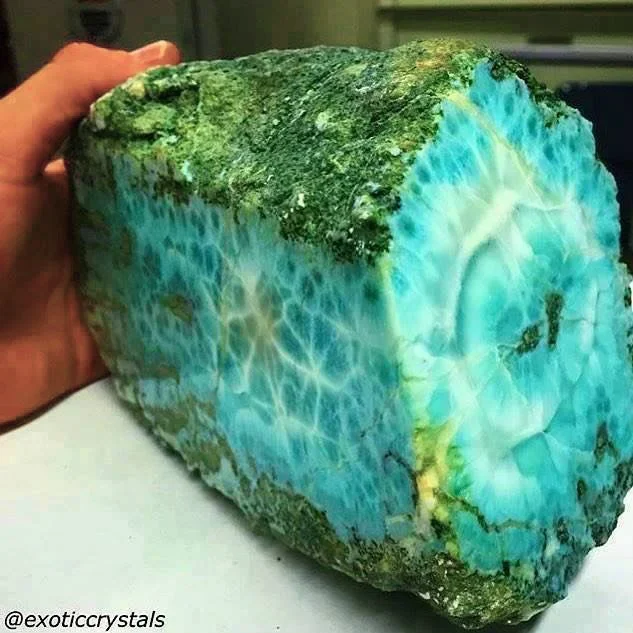
Larimar, a rare and captivating gemstone, is exclusively found in the Dominican Republic. Its unique blue-green hues and smooth texture have made it a sought-after gem among collectors and jewelry enthusiasts worldwide.
History of Larimar
The history is relatively recent. Although the stone was likely known to local indigenous people for centuries, it wasn’t until the mid-20th century that it gained widespread attention. In 1974, an American Peace Corps volunteer discovered the gemstone while walking along the beach near the town of Barahona. Intrigued by its unique color and appearance, he began to investigate its source.
It was later determined that the gem originated from a nearby mountain range. The gemstone is formed through a geological process involving the alteration of volcanic rock. The resulting mineral, pectolite, is typically white or gray, but in the case of larimar, it exhibits a beautiful blue-green color due to trace elements.
Location of Mining
Larimar mining is concentrated in the southwestern region of the Dominican Republic, primarily in the province of Barahona. The most productive mining areas are located in the mountains surrounding the town of Los Chupaderos. Miners extract the gemstone from veins within the rock formations.
The mining process is often labor-intensive, as the larimar deposits can be irregular and scattered. Miners use a combination of hand tools and machinery to carefully extract the gemstone without damaging its quality. Once extracted, the larimar is cut, polished, and shaped into various jewelry pieces.
The Future
Due to its rarity and growing popularity, larimar has become a valuable gemstone. However, concerns have been raised about the sustainability of mining practices and the potential depletion of the deposits. Efforts are being made to promote responsible mining practices and to develop alternative sources of income for communities that rely on larimar mining.
As the demand continues to increase, it is essential to ensure that its extraction and trade are conducted in a sustainable and ethical manner. By preserving the natural beauty of this unique gemstone and protecting the livelihoods of those involved in its production, we can help ensure that larimar remains a cherished and valuable resource for generations to come.
The article below from https://bitcoinist.com/the-atlantis-blue-project-turns-to-stellar-to-help-restore-the-damaged-larimar-trade/ explains proposed remedies to trade in this stone
While the trade has recently been corrupted by malicious actors due to the popularity of the gemstone, the Atlantis Blue Project seeks to use Stellar’s blockchain to thwart this activity and restore its balance.
The Blue Beauty
This rare gemstone is found in the province of Barahona of the Dominican Republic. The stone is coveted by many due to its rumored healing powers, ability to increase one’s communication skills, and desirability as a stone used in fine jewelry. Also known as the Atlantis Stone, Larimar’s blue color comes from its substitution of copper for calcium in its formation.
In the last two years alone, demand for Larimar has tripled, and along with this popularity came plenty of malicious actors trying to game the system. Illegal trading of the mineral has begun to proliferate internationally, and the number of fake stones on the market has increased dramatically.
The Atlantis Blue Project team is a collective comprised of lawyers, miners, artisans, distributors and more, all associated with both the extraction and trade of the gem. Each party in the trade benefits from this unique move to blockchain technology, allowing for both a new tracking and liquidity mechanism.
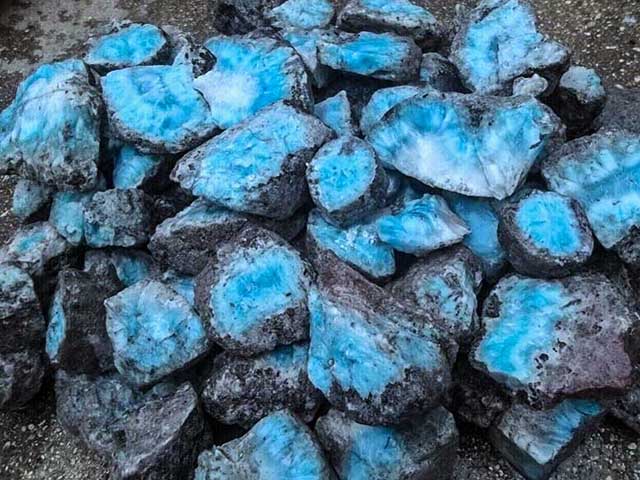
Tokenizing Real-World Assets
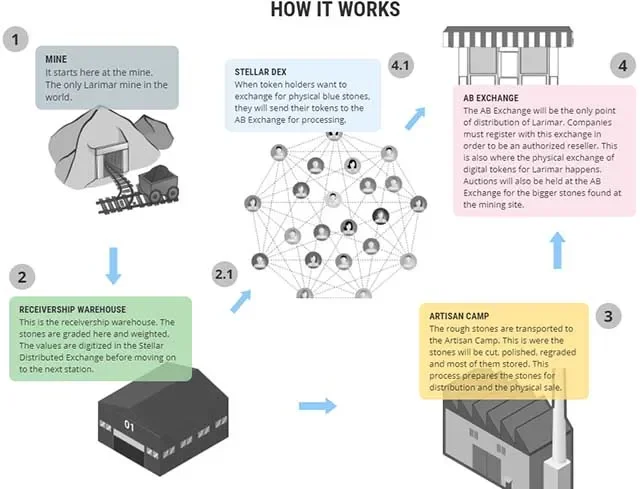
There is much value to tokenizing traditional assets because you not only gain eased liquidity, but tracking becomes as simple as checking the chain. Participants in the Atlantis Blue Project’s ICO can redeem their tokens at any time from the AB Exchange, acting as the only point of distribution of Larimar. When participants wish to redeem, they send their tokens to the AB Exchange for processing.
Frequently Asked Questions: Larimar
Based on the article provided, here are five frequently asked questions about the “Atlantis Stone” of the Dominican Republic:
1. Where exactly is Larimar found?
Larimar is exceptionally rare because it is found in only one square kilometer in the entire world. It is located exclusively in the Dominican Republic, specifically in the southwestern province of Barahona. The most productive mines are found in the rugged mountains surrounding the town of Los Chupaderos.
2. How did Larimar get its unique name?
The name was created in 1974 by Miguel Méndez, a local artisan who “rediscovered” the stone on a beach. He combined the first four letters of his daughter’s name, Larissa, with the Spanish word for sea, mar, to describe the gemstone’s oceanic blue colors. Before this, locals simply referred to it as “Piedra Azul” (Blue Stone).
3. What gives Larimar its distinct blue-green color?
Larimar is a rare blue variety of the mineral pectolite. While pectolite is typically white or gray in other parts of the world, Larimar’s unique Caribbean hues are caused by the substitution of copper for calcium during its volcanic formation millions of years ago.
4. What is the “Atlantis Blue Project” and how does it use blockchain?
Because Larimar’s popularity has led to illegal trading and fake stones, the Atlantis Blue Project was formed. It uses Stellar’s blockchain technology to tokenize the gemstone. This allows every stone to be tracked from the mine to the consumer, ensuring authenticity, providing better liquidity for miners, and preventing malicious actors from corrupting the trade.
5. Why is Larimar considered a “collector’s dream” for the future?
Larimar is considered a finite resource. Current mining is labor-intensive, involving deep, hand-dug shafts in a single mountain location. With demand tripling in recent years and existing deposits potentially facing depletion, high-quality Larimar—especially pieces with deep “volcanic blue” saturation—is expected to become increasingly valuable as a luxury investment.