
Emerald: The Jewel of Verdant Vitality and Rebirth
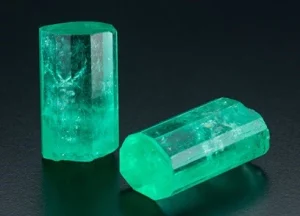
The emerald, with its rich, vibrant green hue, has symbolized hope, renewal, and spring since antiquity. It is the most valuable gemstone in the Beryl family and, alongside ruby and sapphire, holds its place as one of the world’s three most precious colored stones.
The depth and intensity of the emerald’s color are unmatched in the gem kingdom, making it a favorite of royalty, including Cleopatra, and a primary export of ancient empires. Its unique internal features, often called the “jardin,” make every emerald a unique piece of nature’s art.
This comprehensive guide delves into the ancient history, unique geology, and principal sources that define the legacy of the magnificent emerald.
📜 Ancient History and Symbolic Meaning of Emerald
The fascination with the emerald dates back further than any other precious stone, deeply rooted in the history of Egypt and the empires of South America.
The Jewel of Immortality and Fertility
Egyptian Origins (3500 BCE): The earliest known emerald mines, often called Cleopatra’s Mines (Mons Smaragdus), were located in Egypt. The stone was central to Egyptian culture, representing eternal youth, immortality, and fertility. Queen Cleopatra was famously devoted to the gem, using it extensively in her jewelry and court adornments.
The Eye of Truth: Across many cultures, the emerald was believed to endow the wearer with foresight, enhance intelligence, and reveal the truth of a lover’s vow. It was thought to soothe the eyes and bring clarity to the mind.
Spanish Conquest and Trade: When Spanish conquistadors arrived in South America in the 16th century, they found vast, untouched deposits of superior-quality emeralds in modern-day Colombia, which the Incas had prized for centuries. The Spanish quickly began trading these gems, introducing the world’s finest emeralds to the royal courts of Europe and India.
Emerald in Modern Culture
Today, the emerald remains a symbol of wealth and sophistication. It is often given as a 20th and 35th wedding anniversary gift, signifying enduring love and devotion. Its characteristic deep green continues to be associated with prosperity and the vibrant energy of life.
🔬 Emerald Geology: Beryl, Chromium, and the Jardin
The emerald belongs to the mineral species Beryl ($\text{Be}_3\text{Al}_2(\text{SiO}_3)_6$), a family that also includes aquamarine (blue beryl).
The Cause of the Color
The intense green color that defines the emerald is caused by trace amounts of chromium ($\text{Cr}$), vanadium ($\text{V}$), or a combination of both elements, substituting for aluminum in the crystal structure. It is this specific chemistry that distinguishes a true emerald from a less valuable green beryl.
Hardness and Inclusions
While emerald is durable, ranking 7.5 to 8 on the Mohs scale of hardness, it is more susceptible to breakage than corundum (ruby and sapphire) due to the presence of internal inclusions and fissures.
The Jardin: Almost all natural emeralds contain inclusions—tiny internal flaws, fractures, or pockets of gas and liquid—that formed during crystal growth. Rather than detracting entirely from the stone, these features are so common that they are given the romantic French name, le jardin, or “the garden.” These inclusions are used by gemologists to determine if a stone is natural and to identify its geographic origin.
The Emerald Cut: Because of its inherent tendency toward inclusions, the traditional square or rectangular “emerald cut” was developed. This step cut features large, open facets designed to reduce pressure during the cutting process and showcase the stone’s color and jardin beautifully, while preventing corner chipping.
🌎 Principal Occurrences of Emerald
The formation of emeralds is highly unusual, requiring specific geological conditions where the rare element beryllium interacts with chromium-bearing host rocks. This rarity makes high-quality sources scarce.
🇨🇴 Colombia: The Standard of Excellence
Colombia is universally recognized as the source of the world’s finest emeralds. The three most famous mining areas are Muzo, Chivor, and Coscuez.
Color Profile: Colombian emeralds are prized for their pure, vivid green to slightly bluish-green hue, often described as having an unparalleled fire and luminosity.
Unique Geology: The formation process in Colombia is unique, involving hydrothermal activity in sedimentary rock, which results in stones of superior clarity and color.
🇿🇲 Zambia: The Bluer Green
Zambia has emerged as a major modern producer, providing a reliable source for high-quality, saturated stones.
Color Profile: Zambian emeralds often display a deep, slightly bluer tone of green compared to Colombian gems, resulting in a distinct, rich color.
Quality: Stones from Zambia are often known for being cleaner (fewer visible inclusions) than some other sources.
Other Important Sources
Brazil: Producers of good quality, slightly lighter-toned emeralds, notably in the state of Minas Gerais.
Afghanistan (Panjshir Valley): Known for producing high-quality stones that rival Colombian material in color intensity.
Russia (Ural Mountains): A historic source that produced important stones in the 19th century.
👑 Famous Emeralds: Priceless Treasures
Due to their fragility and the presence of the jardin, finding large, clean emeralds is extremely rare, making the following famous stones priceless artifacts.
The Duke of Devonshire Emerald (1,383.95 carats): One of the world’s largest uncut emeralds of superior color. This huge hexagonal crystal was mined in Colombia and given to the 6th Duke of Devonshire in the 1830s.
The Chalk Emerald (37.82 carats): A stunning, historically significant Colombian emerald. Originally the centerpiece of a magnificent necklace, it was recut and is now set in a diamond and platinum ring, housed in the Smithsonian Institution.
The Mogul Emerald (217.80 carats): A famous rectangular-cut, tablet-shaped emerald dating to 1695. One side is inscribed with Persian text; the other features elaborate floral carvings, symbolizing the gem’s journey from Colombia to the courts of the Mogul Empire in India.
Elizabeth Taylor’s Emerald Collection: The actress owned several spectacular emerald pieces, most notably an iconic pendant brooch and necklace set with large Colombian stones, which sold for millions at auction.
The emerald continues to hold its position as a gem of incomparable beauty and cultural weight, a shimmering slice of ancient history that remains highly sought after today.
Emerald FAQ: The Jewel of Verdant Vitality
Based on the guide provided, here are five frequently asked questions and answers regarding the history, geology, and sources of the emerald.
1. What gives the emerald its characteristic deep green color? The intense green color of an emerald is caused by the presence of trace amounts of chromium (), vanadium (), or a combination of both. These elements substitute for aluminum within the crystal structure of the mineral Beryl (). It is this specific chemical composition that distinguishes a true emerald from other green beryls.
2. What is the “jardin,” and why is it important? The “jardin” (French for “garden”) refers to the natural internal inclusions, fractures, and tiny pockets of gas or liquid found within almost all emeralds. Rather than being seen purely as flaws, the jardin makes every emerald unique. Gemologists use these internal features to verify if a stone is natural and to help determine its geographic origin.
3. Why was the “emerald cut” specifically developed for this gemstone? The emerald ranks between 7.5 and 8 on the Mohs scale, making it durable but prone to breakage due to its internal inclusions. The square or rectangular “emerald cut” was designed with open facets and cropped corners to reduce pressure during the cutting process, prevent chipping, and beautifully showcase the stone’s color and jardin.
4. Which country is considered the premier source for high-quality emeralds? Colombia is universally recognized as the source of the world’s finest emeralds, specifically from the Muzo, Chivor, and Coscuez mining areas. These stones are prized for their pure, vivid green to slightly bluish-green hues and superior luminosity, which result from a unique geological formation process involving hydrothermal activity.
5. What did the emerald symbolize in ancient Egyptian culture? In ancient Egypt, where the earliest known mines were located, the emerald was a symbol of eternal youth, immortality, and fertility. It was central to their culture and famously favored by Queen