
Gem Tours are run in March/ April and also in September /October, every year.
Thailand
Bangkok
Bangkok, the capital city of Thailand, is renowned for its bustling markets, vibrant nightlife, and stunning architecture. However, what many people don’t know is that Bangkok is also a hub for the gemstone trade. The city is home to a variety of gemstone markets, where you can find everything from precious stones to semi-precious gemstones.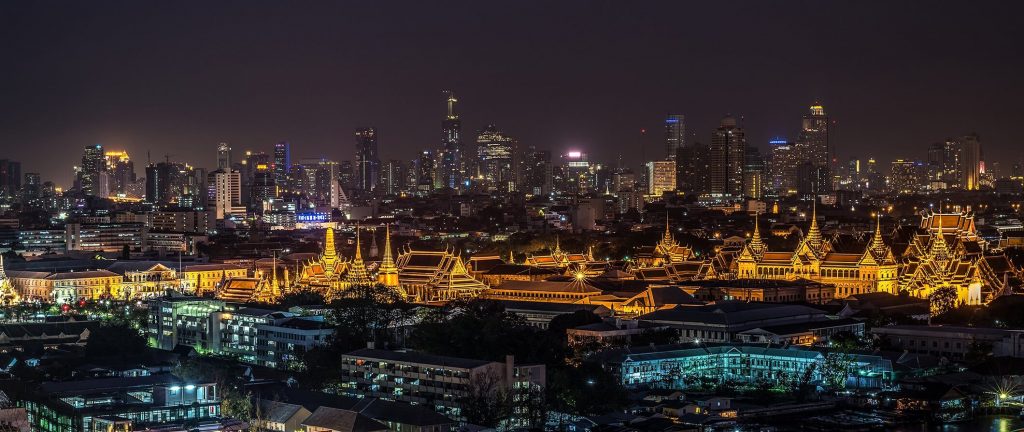
Here are some of the gemstones that you can find in Bangkok:
- Ruby: Bangkok is known for its high-quality rubies, which are often sourced from nearby countries such as Cambodia and Myanmar. These rubies are prized for their deep red color and high clarity.
- Sapphire: Bangkok is also a popular destination for sapphires, which come in a range of colors including blue, yellow, pink, and green. The sapphires found in Bangkok are often of excellent quality and are highly sought after by collectors and jewelry designers.
- Emerald: Emeralds are another popular gemstone that can be found in Bangkok. These gemstones are known for their bright green color and are often sourced from mines in Colombia and Zambia.
- Tourmaline: Bangkok is also a hub for tourmalines, which come in a range of colors including pink, green, and blue. The tourmalines found in Bangkok are often of excellent quality and are popular among collectors and jewelry designers.
- Topaz: Topaz is another gemstone that can be found in Bangkok, with the most popular color being blue. These gemstones are known for their high clarity and brilliance.
Overall, Bangkok is a great destination for anyone interested in gemstones. Whether you’re a collector, jewelry designer, or just looking for a unique souvenir, you’re sure to find something that catches your eye in one of the city’s many gemstone markets. So, the next time you’re in Bangkok, be sure to check out the gemstone markets and explore the city’s rich heritage in the gemstone trade.
CHANTHABURI
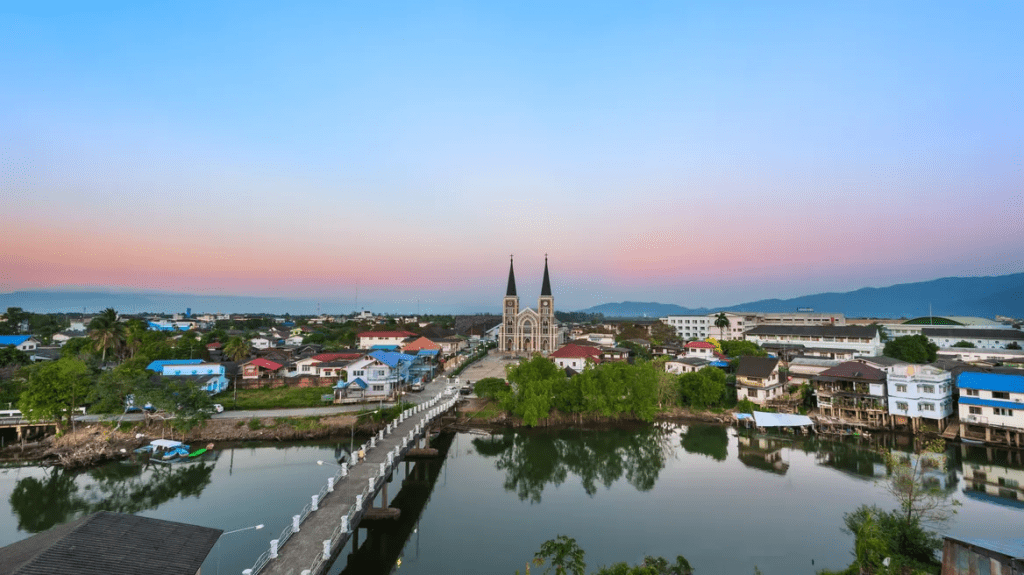
The gemstone market in Chanthaburi is an extremely interesting market. It is located about 250km South East of Bangkok (3.5hrs) and 80km West of the Cambodian border. The gem market is only open on Friday and Saturday and is basically a wholesale market. Most gem dealers in the Bangkok Jewellery Trade Centre go to the Chanthaburi market on the weekend to buy their stock.
The market is unique in many aspects. Buyers sit at tables in one of many under cover shops that are open to the street, allowing brokers easy access. The buyers can write down what they are looking for, or chance their arm and wait to see what the brokers offer. Brokers may be offering their own gemstones, someone else’s or a combination of both.
Click here for more info on fascinating Chanthaburi
The brokers wander from table to table offering their gems. If you see something you like, you can accept the price and buy. The owner of the table will inspect the gemstones and discuss what they are with the broker and seller. So, if you are buying Sapphires, they will be weighed and any treatment discussed, when the buyer is happy the deal will be done. The owner of the table will take a commission of between 10 and 20%. Who pays the commission is decided before the deal is completed and it is either ‘fresh’ meaning the buyer pays or else the broker pays.
Alternately a buyer can rent a table monthly or annually and avoid the commissions, many of the buyers from Bangkok take up this option.
Many deals are also done in the street or coffee shops to avoid commissions. Brokers simply offer gemstones as you walk past, however this gives you less opportunity to properly examine the gemstone and increases your chances of making a poor purchase. You can of course sit in a coffee shop and examine the stones at your leisure but unless you are experienced and have some gem testing equipment with you, you may find what you bought and what you thought you bought, to be two entirely different things!
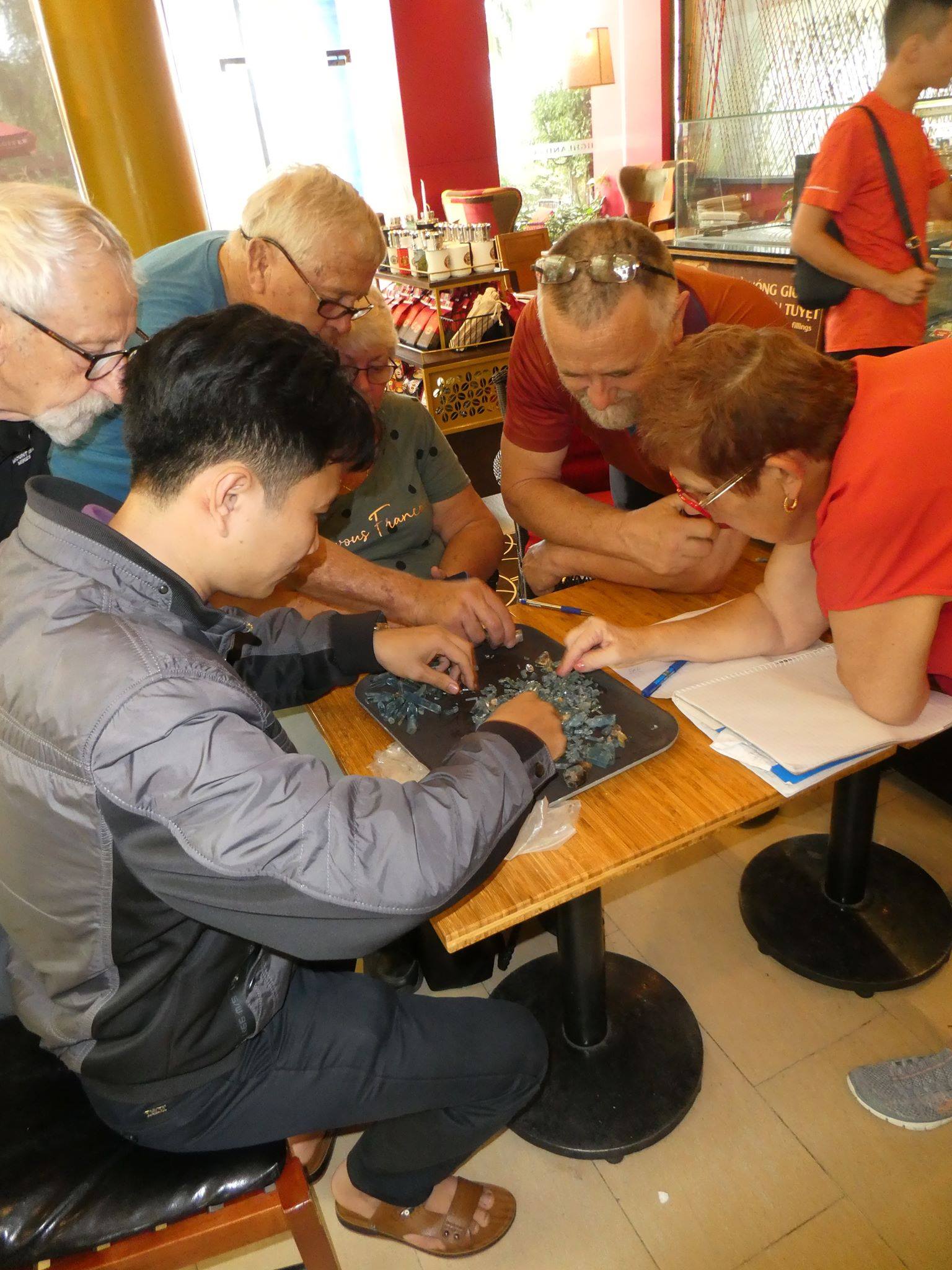 Generally speaking, the owner of the table is responsible if the gems turn out to be anything other than what was actually sold. Since the Brokers and Table Owners, all know each other, it assures a degree of certainty. In practice this really only works where there is an existing relationship between the buyer and the table owner. If you arrive in the market as an unknown and you have a dispute, it will likely end in a ‘buy at your own risk’ situation.
You may also be offered the services of a local lab to verify the gemstone before buying. The result of the examination may or may not be especially accurate or in depth. If you are buying a particularly expensive gemstone, the seller may offer to send it to Bangkok to a truly independent lab for certification before you buy. The deal can then be completed in either Chanthaburi or Bangkok.
It is when a broker offers a package of gems and the buyer wants to make an offer, that things get really interesting! Sometimes the gemstones are offered as a package and sometimes you may ‘select’. Obviously the price per carat is much higher for selecting from the package and often this option is not offered. Package lots of 500 plus carats are not uncommon and so this is not really a market for purchasing one or two stones.
Once you have selected the individual gems, the package is wrapped up, sealed and signed by the prospective buyer, and the broker takes it back to the gemstone owner, with the price written on the package. The owner of the gemstones can accept the offer which means the package is returned to the buyer intact and the deal is completed.
If the gemstone owner declines the offer, they may tear up the package and the offer is rejected, or send it back intact with a counter offer. This process may be repeated a number of times through the day and it is not unusual for it to happen three times or more.
Brokers generally only make 2% on each sale. If they can obtain a higher price, then they keep the difference, so they may return the package and say that the owner wants a higher price just to improve their share. It is difficult to know if the offer was actually accepted by the gemstone owner or not if the package remains intact. The gemstone owner may have rejected the offer, but not torn open the package. The package may come back with a counter offer attached, it is an acceptable practice to tear open the package and reject the offer, or a counter offer may be made.
If the package comes back still sealed but not accepted, it may be that the Broker is trying to squeeze out and extra margin. It is acceptable to offer the broker a small ‘tip’, if you believe that the owner did accept the offer in the first place and the broker is holding out in hopes of getting a little extra. The buyer is obligated to buy if the offer is accepted, however there is no enforcement of this. Once again, the market tends to self-regulate and getting a bad reputation results in less opportunity to buy in future. Since it is a relatively small market of only a few hundred participants, a bad reputation is easy to acquire. It really is a game of cat and mouse!
There are also dozens of shops selling gemstones, jewellery, gemstone rough and specimens. There are also stalls lining the streets around the market with a variety of gems and rough pieces and gold and silver jewellery. It is easy enough to buy some nice specimens and silver rings and the prices are cheap enough, however haggling is still encouraged. I usually buy quite a few rings at a time, so will negotiate a bulk price once I have chosen. I do manage to get good prices on my jewellery as I tend to go to the same dealers year after year and they know to give me a good price, especially as I bring tour guests who also buy!
I am often asked for advice on buying gemstones at Chanthaburi. My advice is always the same, go for a look, maybe buy a cheap gem, specimen or silver jewellery for the experience, but otherwise don’t.
I take guests on my tours down to the market to show them and explain how it all works, but we don’t buy. I have been using a broker for the last five years to buy my gemstones. I pay a retainer, set my budget monthly and give deliberately vague buying guidelines.
It has taken time to build a rapport with my broker so that he understands what I am looking for. Currently I am chasing gemstones above 3cts, but in the past I have asked for 1ct gems for putting into rings. I take whatever is ‘flavour of the month’ as it is cheaper. If I specify a particular type of gemstone, it usually increases the price. Sometimes my broker cannot select individual stones from a parcel and will call me to see if I want the whole parcel.
I am fortunate to have found an honest, reliable and knowledgeable broker, who has bought me some rare and unusual gems. I have some green Sphene, colourless Mali Garnets and even an Amazonite. He also regularly buys me 5ct plus Rhodolite and Spessartite garnets.
One last word of warning, while ‘ferang’ (foreigners) can buy in the market, it is illegal for them to sell. So, if you take a parcel of gemstones hoping to sell them, you may end up being deported and having your gemstones confiscated!
💎 The Moon City’s Enduring Legacy: Chanthaburi and the World of Gems
The Thai locale of Chanthaburi (จันทบุรี)—meaning “City of the Moon” in a nod to its Sanskrit root, chan—may be territorially modest, yet its footprint on both Siam/Thailand’s history and the global gemstone trade is disproportionately large. This charming, petite settlement is a jewel itself within the “Land of Smiles.”
🏞️ The Mythic Dawn of Gemstones
Local lore offers a fantastical genesis for the area’s geological riches. As recorded by Krissna Chang-Glom (1988), ancient Chanthaburi was initially devoid of gems. Then, one dark night, a brilliant light was witnessed descending from the heavens, crashing near Khao Ploi Waen. Rushing to the site, villagers observed a hole emitting green luminescence. There, they discovered mae ploi (the mother of gems), a rock they began to revere. However, upon attempting to touch it, the mae ploi fled, trailed by countless louk ploi (baby gems). Those “children of the gem” that failed to keep pace were scattered throughout the Chanthaburi region, sowing the seeds of its future wealth.
🌍 A Glimpse into Southeast Asia’s History
Thailand, Formerly Siam
Known for much of its past as Siam, Thailand (Prathet Thai; ประเทศไทย) occupies the heart of mainland Southeast Asia, sharing boundaries with Myanmar (Burma), Laos, Malaysia, and Cambodia. Notably, Thailand is the sole country in the region to have evaded European colonization.
The ethnic Thai people, kin to the Shan of Burma, the Lao of Laos, and the Tai of Vietnam and southern China, established their inaugural kingdom at Sukhothai in the early 13th century. The current capital, Bangkok (Krung Thep; กรุงเทพฯ), was founded in 1782 after the previous capital, Ayutthaya, was devastated by Burmese invaders. A surge of Chinese immigration in the late 19th and early 20th centuries led to Chinese nationals dominating much of the business landscape today, including the gem trade.
Cambodia, Land of Angkor
Present-day Cambodia (Kampuchea) possesses a history spanning over two millennia. The colossal kingdom of Angkor—famous for the temple complex Angkor Wat—flourished in the ninth century, once commanding an empire from the Burmese frontier to the South China Sea. By the 15th century, the kingdom waned under pressure from the Thais and Vietnamese. In 1863, France incorporated the territory into its Indochina empire, with Cambodia finally achieving independence in 1953.
🏛️ Chanthaburi’s Deep Roots
The town of Chanthaburi has historically been the primary nexus for gem mining and commerce in both Thailand and Cambodia. Its establishment is traditionally credited to the Chong (‘Xong’), a Mon-Khmer tribe, around the 12th century AD, although the discovery of 2,000-year-old stone implements suggests a much earlier human presence.
👑 The Great Liberator: King Taksin the Great
Chanthaburi’s narrative is powerfully linked to one of Thailand’s most revered monarchs, King Taksin. Born Sin in 1733 to a Thai mother and Chinese father, he rose through government service to become the governor of Tak Province, hence his title Phraya Tak Sin (Taksin).
Following the Burmese obliteration of the Ayutthaya Kingdom in 1767, Taksin and his 500-strong force sought refuge in Chanthaburi for five months. He chose this locale due to its significant Chinese populace (many of his soldiers were Chinese). Faced with an uncooperative governor, Taksin was forced to conquer both Chanthaburi and Trat. His military base, Khai Nern Wong (‘camp on a small hill’), still stands just outside the city.
In 1768, Taksin, now leading an army of 5,000, successfully expelled the Burmese from Thai territory and reunified the nation. He established his initial capital at Thonburi. His general, Chao Phraya Chakri, famously captured the Emerald Buddha from Laos and brought it back during Taksin’s 15-year reign.
Taksin’s reign ended abruptly in a rebellion, leading to his execution in 1782. As was custom for nobility, he was placed in a silk sack and beaten to death with a sandalwood club to prevent royal blood from touching the ground—a method that has fueled persistent, though improbable, rumors of his escape.
The ensuing Chakri Dynasty was founded by Chao Phraya Chakri (King Rama I), who moved the capital to the opposite bank of the Chao Phraya River, establishing Krung Thep (‘City of Angels’), or Bangkok, in 1784. Despite his overthrow, King Taksin is still profoundly respected for his role in recapturing and unifying Thailand, earning the posthumous title “King Taksin the Great” in 1981.
🐇 The Lunar Hare: An Enduring Symbol
In contrast to the Western concept of the “man on the moon,” Chinese culture, dating back over 2200 years, envisions a rabbit on the moon—specifically, a jade rabbit constantly grinding herbs for the immortals.
This lunar rabbit motif is not limited to China; it appears in Buddhist folklore and even among the Aztecs in Mesoamerica. Its influence persists, notably in the Japanese name of the title character of the Sailor Moon franchise, Usagi Tsukino, which is a pun on the “rabbit of the moon.”
In Chanthaburi, the “City of the Moon,” the local government seal features this tradition: a rabbit silhouetted against a full moon.
🍲 Chanthaburi’s Diverse Demographics
Despite its small dimensions, Chanthaburi is a remarkably cosmopolitan center. Beyond the dominant Thai and Chinese populations, it hosts a large Vietnamese community. The French-constructed Catholic Cathedral of the Immaculate Conception (built in 1880) is reportedly the largest Christian church in Thailand, built to serve the substantial Vietnamese Catholic minority.
Another major group is the Shan (known locally as Gula or Kula; กุลา). Already knowledgeable about Burmese gems, these mid-19th century migrants quickly identified and began exploiting the area’s little-tapped gem potential. The Gula miners and traders revolutionized the business, and their descendants remain prominent in the trade today.
French Interlude
French colonial forces occupied Chanthaburi for 11 years starting in 1893 after the Paknam crisis. In 1905, Chanthaburi was returned to Thailand, which, in exchange, was compelled to cede a segment of western Cambodia, including Pailin, to the French.
💎 The Thai-Cambodian Gem Lode
The primary source for the region’s rubies and sapphires lies along the Thai-Cambodian border, necessitating a combined discussion of both nations’ deposits. References to the mines in Eastern Thailand intrinsically include those just across the frontier in Cambodia.
Early Gem References
The earliest documented mention of Siam’s gems comes from the Chinese voyager, Ma Huan, in 1408 AD, who noted the trade of “Hung-ma-sze-kên-ti stones”—an inferior ruby variety—near a trading post south-west of the kingdom. Subsequent accounts, such as Manual de Faria (early 17th century) and Nicolas Gervaise (1688), confirmed the existence of sapphire and ruby mines.
De la Loubère (French envoy, 1687) described Siam as “abounding in mines of rubies and sapphires,” noting that the stones frequently ended up with secretive monks who used them as charms.
The Nineteenth Century Surge
John Crawfurd (British envoy, 1828) provided crucial detail, identifying sapphire, Oriental ruby, and Oriental topaz (yellow sapphire) in the hills of Chan-ta-bun (Chanthaburi). He noted the gems were extracted by washing alluvial soil, though he deemed the quality inferior to those from Burma. The mines were a tightly controlled royal monopoly.
Mgr. Pallegoix (1854) gave a rich account, noting that Chinese pepper planters around Khao Sa-bab and Xong tribal areas collected precious stones, selling them cheaply to Chinese itinerant traders who exported them to China. He also confirmed that the King reserved the most abundant and best-quality areas for himself.
A pivotal moment occurred around 1857 when Shan traders from Mogok (Burma) effectively rediscovered Chanthaburi’s mines, igniting a gem rush. The story holds that the rush began after a local man, Nai Wong, netted gem-bearing gravel instead of prawns, which he traded to the Shan. Thousands of Burmese Shan, known for their mining instincts, flooded the region, developing the mines and establishing the enduring prominence of their descendants in the trade.
In 1880, a financial magnate named Mong Keng consolidated control over the mines, opium, and gambling monopolies, earning the title “King of Precious Stones.” His success amplified the reputation of Pailin’s blue sapphires in Asia and Europe. However, British firms later took over parts of the district and the Pailin mines, marginalizing Mong Keng.
H. Warington Smyth (1898), an Englishman working for Siam’s Department of Mines, offered a definitive portrait of the era. He lauded the Gula (Shan) as naturally gifted and independent miners, essential for the industry’s survival. Smyth detailed the tense relationship between the diggers and concession-holders (like the British Siam Exploring Co.), noting that the Shan would abandon mines en masse rather than accept infringements on their right to sell in the open market.
Excerpt from H. Warington Smyth (1898):
“In buying stones, it is well to remember you are entering the arena to pit your knowledge against the other man’s. He regards it as a sporting contest, and he would fleece or ruin his dearest friend as part of the game…”
📉 Chanthaburi’s Evolution in the Twentieth Century
In 1907, the loss of Battambang Province—and the valuable Pailin mines—to the French-controlled Cambodia dramatically cut Thailand’s sapphire production, as Pailin had supplied up to 90% of the world’s fine sapphires.
The ruby market, however, saw a renaissance after a 1962 military coup in Burma effectively closed off the world’s most famous ruby mines. This shifted the focus to the Thai-Cambodian border stones, drawing many dealers and cutters from Burma to Thailand. Chanthaburi’s standing was further cemented in the mid-1970s when its traders pioneered a method for heating geuda sapphire from Sri Lanka.
By the late 1990s, most of the local Thai and Cambodian deposits were exhausted. Undeterred, Chanthaburi’s resourceful gem entrepreneurs became global prospectors, sourcing materials from Sri Lanka, East Africa, and Madagascar. This diversification transformed Chanthaburi into the Colored Gem Capital of the globe, trading a vast array of precious and semi-precious stones, not just ruby and sapphire.
🗺️ Mining Sites and Distinct Gem Varieties
The rubies and sapphires originate from several key alluvial or eluvial zones:
Khao Ploi Waen & Bang Kha Cha: Located near Chanthaburi, these sites produce blue, green, yellow, and black-star sapphires but no ruby. Khao Ploi Waen, the first find, is a volcanic plug where sapphires are mined from derived placers. The area is famous for the characteristic “Mekong Whisky” golden-yellow to orange sapphires, highly prized locally. Twelve-rayed black-star sapphires, a rare occurrence resulting from both hematite and rutile silk, are common here.
Tok Phrom, Bo Waen, Bo Na Wong, Bo I Rem: Situated near the Chanthaburi-Trat border, this zone mainly yields ruby (at Bo Waen and Bo Na Wong), with blue sapphire dominating at Tok Phrom and I Rem. The sapphires are a deep, pure blue, resembling the Pailin material but tending to be darker, making them excellent for smaller cuts (under $0.50$ ct). This district supplies a significant fraction of Thailand’s ruby exports.
Bo Rai & Nong Bon (Trat Province): These were Thailand’s largest ruby mines, accessible by good roads. Only ruby was found here, with larger stones from Nong Bon and finer colors from Bo Rai. Mechanized mining in the 1970s unearthed larger gems, including several 10+ carat fine quality stones. The largest rough gem found in the area was a 150-carat ruby unearthed in Trat in 1985. Due to even coloration, most cut Thai rubies above five carats tend to be overly dark.
🇰🇭 Pailin, Cambodia: The Sapphire Name
Further east in Cambodia are the famous Pailin fields, the very name of which, pailin (ไพลิน), is the Thai word for blue sapphire.
Local folklore attributes the town’s name to a magical otter (pey) playing (leng) in a stream on Phnom Yat, whose mouth was full of gems—pey leng corrupted to Pailin.
The Khmer Rouge and Recovery
The rise of the Khmer Rouge in the early 1970s halted mining for several years, and it remained limited through the guerrilla war until a peace agreement in 1991. Pailin was one of the Khmer Rouge’s final strongholds, where Ieng Sary operated like a feudal lord, selling resources. Following the peace, UN peacekeeping troops and Thai miners moved in. As of 2011, most of Pailin’s mines are also largely depleted.
Qualities of Pailin Gems
While Pailin’s rubies are of good quality after heat treatment, its major distinction is its blue sapphires. Ranging from medium to deep blue, this material strongly resembles the dark stones of Bo I Rem. The sapphires are especially fine in small sizes (below 0.50 ct), where they hold their color well.
An interesting feature is the virtual absence of colorless, yellow, and green sapphires; local diggers only occasionally find a yellow stone. Zircon and pyrope garnets are also present, alongside corundum.
MAE SOD
Mae Sod, also known as Mae Sot, is a border town located on the Thai-Burmese border. It’s a small town that is not heavily touristed, making it an authentic destination for those seeking an off-the-beaten-path experience.
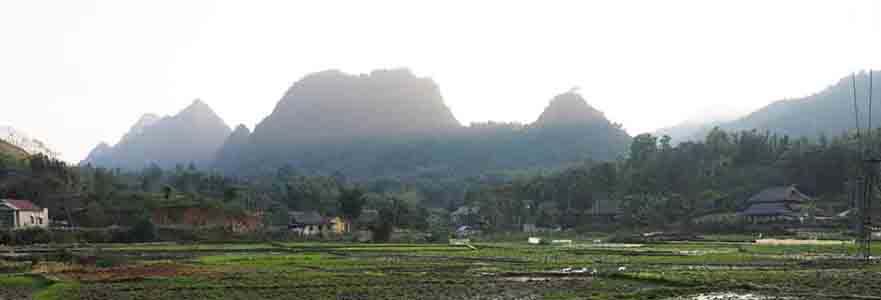
One of the main draws of Mae Sod is its jade market, which is said to be the best in Thailand. Here you can find all sorts of jade carvings, jewelry, and raw jade. The market is located down the main street, and there are around 40 dealers selling sapphires, rubies, and other gems as well. Mae Sod sometimes has great deals on star Sapphires from Myanmar.
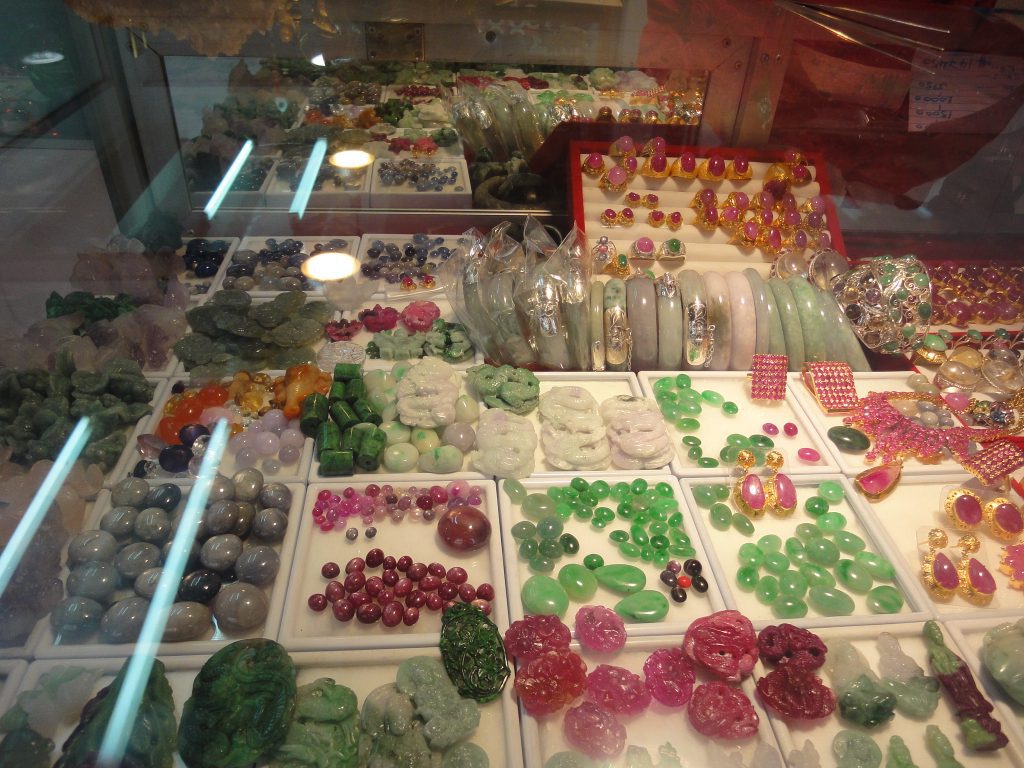
Aside from the jade market, Mae Sod has an extensive general shopping market at the border, which is worth exploring for its unique items. And for foodies, there’s an incredible outdoor market where you can find authentic Thai cuisine.
Mae Sod is also known for its unique blend of Burmese and Thai culture, which can be seen in its architecture, cuisine, and people. It’s a fascinating destination for cultural exploration.
To get to Mae Sod, we take a 50-minute flight from Bangkok on a small plane that only seats 80 passengers. The flight is at a low altitude, so you can enjoy scenic views of the countryside along the way.
Mae Sod is on the Thai/ Burma border and is the best place to buy Jade. There are Jade carvings, jewellery and slabs of raw Jade.
There is also a gem market down the main street, with about 40 dealers. You can expect to find Sapphire, Ruby and an array of Jewellery. There is also an extensive general shopping market at the border. They had an awesome range of sweets, some not so good, my favourite is the mini peanut slabs.
We eat at a fabulous outdoor market and the food is totally authentic. You’ll also enjoy the fact that we are the only foreigner’s in town!
MAE SAI
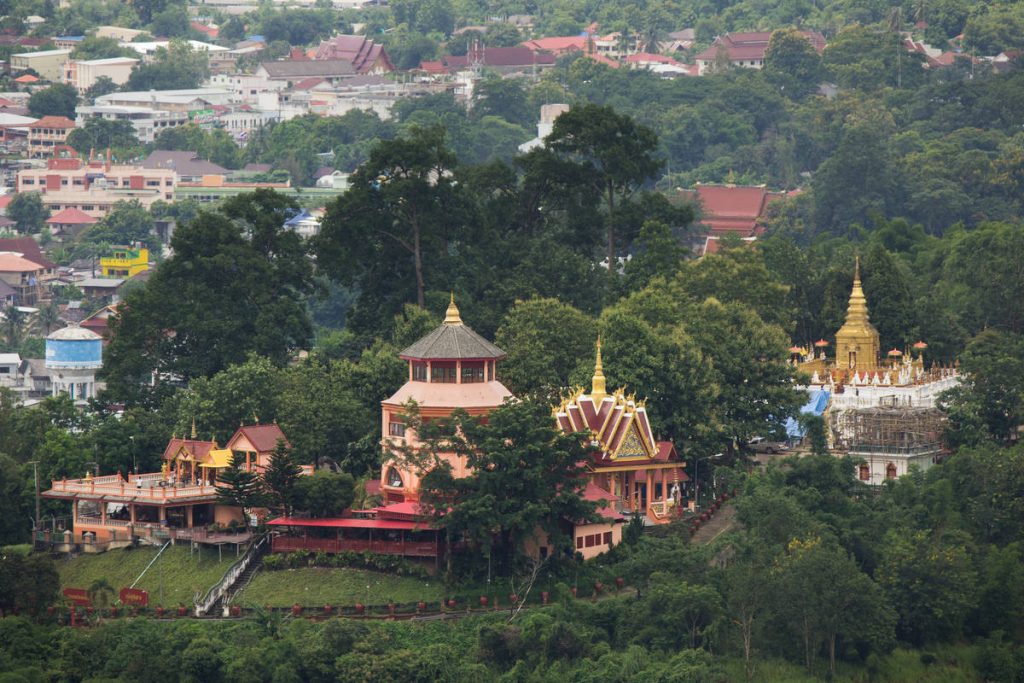
We fly to Chiang Rai (1.5hrs), from there we take a 40 min transfer to Mae Sai. This is another Thai/ Burma border town in the Golden Triangle,
Mae Sai and Mae Sod are similar but different! Mae Sai has the added advantage of Burmese Amber.
Spinel and Maw Sit Sit can sometimes be seen here at attractive prices,
There are a lot of Burmese silversmiths in this town, the stone setting and classic native and European styles can be high quality and inexpensive.
There are many dealers here and the street food is amazing. You can also get a Thai foot massage on the street. There are many small jewellery shops where the prices are also very reasonable.
Here is the Hotel we use in Mae Sai
KANCHANBURI/ CHIANG MAI.
We go to either or both of these destinations, depending on what guests want to see.
Kanchanburi was a centre for Sapphire mining, however the deposit is pretty much worked out. However there is still plenty of Black Spinel.
There is a market with gems and jewellery for sale, but there is also lots more. There are wonderful riverfront restaurants, the War cemeteries and the Thai/ Burma Railway Museum. There is also Hellfire Pass and The Three Pagodas on the Burma border.
Chiang Mai is an ancient walled city in the North of Thailand. There aren’t many gemshops, but there are lots of other things to see and do. Giant Pandas at the Zoo, Elephant Sanctuaries and cooler mountain temperatures.
We generally visit here more for relaxation and to experience ‘lanna’ culture, which is based mostly around food! You can also see a Muay Thai fight here if you like, it’s not as violent as you’d think. It’s more like a choreographed, defensive ballet…….well…. with an occasional punch.
.
PHUKET
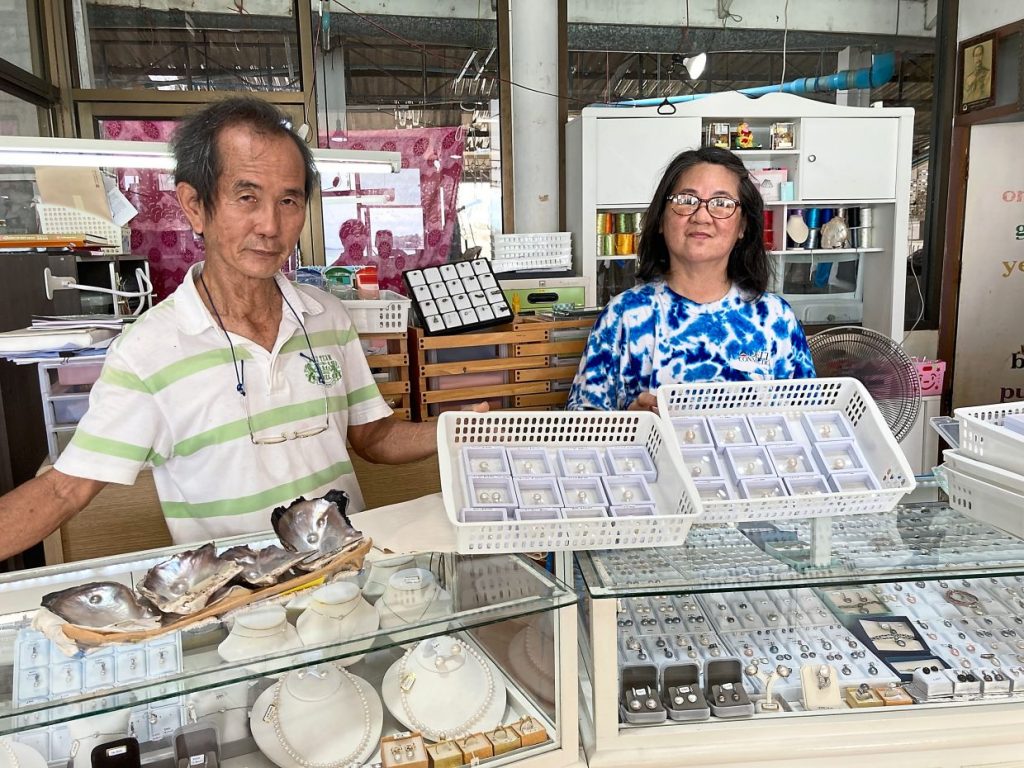
We fly from Bangkok to Phuket (1hr 20min) and visit an offshore Pearl Farm.
We visit the Pearl Farm, follow through the process of how the oysters are seeded, grown out and harvested.
We also get to visit the retail outlet and overpay for pearls! Luckily as we buy wholesale, we don’t get ripped off!
Phuket Pearl Farm: A Unique Experience in the Andaman Sea
Phuket, a beautiful island in the Andaman Sea, is known for its stunning beaches, crystal-clear waters, and vibrant culture. But did you know that it’s also home to a unique attraction that’s not to be missed? Phuket Pearl Farm, located on the picturesque island of Phuket, offers visitors the chance to learn about the fascinating process of cultivating pearls in the warm waters of the Andaman Sea.
Vietnam
Luc Yen and Yen Bai are two provinces in the North West of Vietnam about 230km from Hanoi, rich in gemstones.
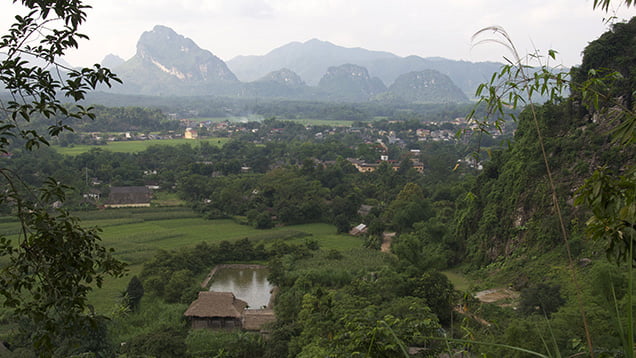 The main centre of the gemstone trade is in a small town called Yen The, in Luc Yen province. Recently a rival market has opened in Yen Bai, which is only 160km from Hanoi. The main attraction of the new market is that it is only 2.5hrs drive from Hanoi, as opposed to 4 hours to Luc Yen. Most of the gemstones come from Luc Yen and it is likely that dealers will start travelling to the Yen Bai market to better service buyers from Hanoi. The market in Yen Bai is about a quarter of the size of the one in Luc Yen as at 2024, but has a very interesting range of dealers.
Northern Vietnam is spoilt rotten with gemstones, Sapphire, Ruby, Spinel, Tourmaline, Garnet and less well known, Amazonite, Tektite, Pargasite and Humite.
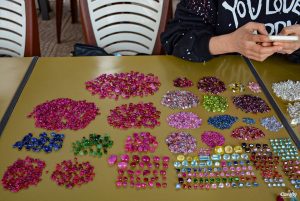 Yen The has a daily morning market with about 80 different dealers, the vast majority of whom are female. There are male dealers, however I have rarely managed to buy anything from them and it seems that the women make the deals! The markets begin about 9am daily and carry on through until midday or whenever the dealers feel like it. Buying in the market is relatively easy even if you don’t speak Vietnamese, as all the gemstones are laid out on a small 50cm x 50cm table. You simply sit down, select your gemstone and say “Vietnam Dong, Cam On?”. This is equivalent to saying ‘how much’ in the local currency which is called Dong. If you don’t ask for the price in the local currency, they will quote in US dollars. The dealers will accept both US dollars and VND, however i always feel I get a better deal operating in the local currency. For example, if the price is USD 500, you might get USD50 off. However, the price in VND would be 12.5 million and I feel it is easier to get the price below, 10 million which is a bigger discount. (assuming 25 000VND = $1USD). It can be tricky trying to working out conversion rates but after a day or two you find it comes quite easily and there are always calculators on the phone you can use to check your mental calculations.
Interestingly the Vietnamese write 15 million as 15tr (trillion). I do not know why, but if you write 15m, they do not know what you are asking. Confusingly 1 500 000 can also be written as 1500k. It can get quite confusing.
So, you have asked for the price, the dealer will write a number on a piece of paper or punch the number into their phone, you simply scribble an alternate number if you think it is too high and so on. Often you will still be quoted in USD a lot of the time, if this happens, I simply reply with the price in VND!
 You should only make a counter offer if you intend to buy. It is okay to stop negotiations if you can not agree on a price, however you really are committed to buy if the seller agrees with your price. If you don’t you will find it difficult to get prices from any other dealers. It is a very small town and your reputation will be quickly set. The difficulty in buying is the price, how much should you pay? I always say, “If you see it and you like it and you think the price is right, then buy it!” I do offer advice to my tour guests as to current market values and what I would expect or be willing to pay. I have had guests on my tour pay twice what I would expect to, but they were happy with the price and did not want my help. I first visited the market in 2016 and (other than during COVID), have been twice a year since, so I have a very good idea of market prices.
Spinels are getting more and more popular and the prices are starting to rise however they still offer great value for money, come in a great range of colours and large clean sizes.
Luc Yen is also known for an extremely rare gemstone, the Cobalt Blue Spinel. It is found in only small areas in the communes around An Phu about 20km from Yen The . These gemstones are very, very scarce and there are only a handful of reported gems over 1ct. Prices begin about $US10 000 per carat; these are seriously rare gemstones!
You can buy specimen pieces of these rare Spinels in the host marble, sometimes with Pargasite. The specimens are dotted with teeny, tiny octahedral crystals, displaying the full neon blue colour.
If you are interested in purchasing one of these rare gemstones, I do know a local broker who has access to top quality Cobalt Blues. He is able to source them at significantly better prices than I am able to. The largest one I have been able to buy is 0.2cts and it certainly was not cheap. I do have a few crystal shaped, gem quality pieces that are about 0.02cts (as at October 2024)
There are about 20 shops in Yen The where you can buy gemstones, specimens and jewellery. They even make paintings out of crushed gemstones.
You can even have paintings made to order. Simply take a photograph you want reproduced and within days they will replicate it for you. The paintings are done on an acrylic base and are very true to life. Natural gemstones are crushed into a fine powder, washed and dried in the sun and then applied on top of a layer of glue. The paintings can be done in any size up to a full sheet of acrylic (200cm x 150cm). I usually stick to A4 size. I have had people do portraits, but most often it is of their pets as a memoriam. The paintings themselves are quite reasonably priced, but Vietnam Post charges horrendously, so it’s best to order a week ahead and collect them when you get there. I usually take them back to Bangkok and post them home from there.
Yen The is easy to get to, there is a local bus service from Hanoi if you have nerves of steel, otherwise hire a car and driver and enjoy the ride. You will spend at least one hour on narrow windy roads and are likely to see trucks laden with 50 tonne slabs of marble hurtling towards you at just about every turn. There are plenty of motels, I recommend the Phuc Hung and the first coffee shop and restaurant you see near the school as you head to the morning market. Nobody speaks English (fair enough too!) so a lot of pointing and charades is required. If you go as an independent traveller, I wish you good luck, you will need it but will be well rewarded!
Luc Yen is a district located in the Yen Bai province of Vietnam, which is known for its abundant deposits of gemstones. The region is home to a variety of precious and semi-precious gemstones, including rubies, sapphires, spinels, tourmalines, and topazes.

Let’s take a closer look at some of the gemstones found in Luc Yen and their unique characteristics:
- Ruby: The Luc Yen ruby is one of the most sought-after gemstones in the world. The rubies found in this region are known for their intense red color, which is caused by the presence of chromium. The Luc Yen rubies are often small in size but are of excellent quality.
- Sapphire: The sapphires found in Luc Yen come in a range of colors, including blue, yellow, green, and pink. These gemstones are known for their high clarity and brightness, making them popular among collectors and jewelry designers.
- Spinel: Spinel is a lesser-known gemstone that is found in abundance in Luc Yen. The spinels found in this region come in a range of colors, including red, pink, blue, and purple. These gemstones are prized for their brilliance and durability, making them a popular choice for jewelry.
- Tourmaline: The tourmalines found in Luc Yen come in a range of colors, including green, pink, and blue. These gemstones are known for their unique color patterns and high clarity, making them a popular choice for collectors and jewelry designers.
- Topaz: The topazes found in Luc Yen come in a range of colors, including blue, yellow, and pink. These gemstones are known for their high clarity and brilliance, making them a popular choice for jewelry designers.
Overall, the gemstones found in Luc Yen are highly valued for their unique colors, high clarity, and durability. These gemstones are popular among collectors, jewelry designers, and enthusiasts who appreciate their beauty and rarity. If you’re ever in Vietnam, be sure to visit Luc Yen and explore the region’s rich gemstone heritage.
We fly to Hanoi (1hr 40mins) and take a mini van to Yen The (aka Luc Yen). The trip takes 4 hours and we make a comfort stop half way.
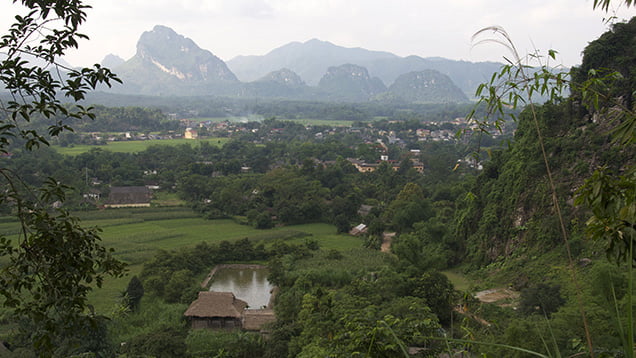
Yen The is the centre for gemstones in Northern Vietnam. There is a daily morning market of about 80 dealers selling Ruby, Sapphire, Tourmaline, Spinel and Tektites. There are also many shops to buy gems from. We take a trip out into the surrounding countryside to meet the miners and you can buy direct from them!
We also get to watch the famous ‘gemstone’ paintings being made. You can even have a portrait done in gemstones!!
The whole town of Yen The is surrounded by marble mountains. The marble is exported to India and Italy. We sometimes visit the marble mines, depending on weather conditions.
In Yen we may meet a ‘local’ named Gier. He is a Norwegian who moved to Yen The in 2017. He and his Vietnamese wife Mai, will show us around and then take us to the best ‘restaurants’ for dinner, if they are in town. If they are not in town, I have them pre arrange everything for us. We spend two nights here as it is one of the highlights of the trip.
Pleiku
Pleiku is a city located in the Gia Lai province in Vietnam. The region is known for its rich deposits of gemstones, particularly Peridot, Rubies and sapphires. These gemstones are extracted from the mines located in the hills surrounding the city.

If you’re a gemstone enthusiast, Pleiku is a must-visit destination. Here, you can explore the local gemstone markets and learn about the various types of gemstones found in the region. You can also visit the mines to see how the stones are extracted from the earth.
One of the best places to visit is the Pleiku Gemstone Market, which is open daily from early morning to late afternoon. Here, you can find a wide variety of gemstones, including Peridot, rubies and sapphires of various colors, shapes, and sizes. You can also find beautiful pieces of jewelry, such as rings, earrings, and pendants, made with locally sourced stones.
If you want to learn more about the gemstones found in the region, you can also visit the local mines. One of the most popular mines to visit is the Tien Thanh Ruby Mine, located about 25 kilometers from Pleiku. Here, you can see firsthand how the rubies are extracted from the earth and learn about the history of gemstone mining in the region.
Overall, Pleiku is a great destination for gemstone enthusiasts. With its rich deposits of Gems and bustling gemstone markets, there’s no shortage of things to see and do. So if you’re looking for a unique travel experience and a chance to discover the world of gemstones, consider adding Pleiku to your travel itinerary.
We fly from Hanoi to Pleiku in the late afternoon, arriving in time for dinner. The next day we take an hour long drive to visit the Peridot mines. The mines are all dug by hand and surround a caldera lake. You can collect your own samples as a souvenir or buy better samples from the miners themselves.
The Peridot crystals here can be quite large and it is not uncommon to be able to buy facetted stones that are 20cts. We also have a few dealers visit us at our hotel and there is a great coffee shop a couple of hundred metres from the hotel. The next day we fly to Saigon.
See more detail on our sister site Gems and Tours
[Contact Andy Turkington] | [View the 2026 Tour Itinerary] | [Shop the Collection]
Check out our Vietnam and Thailand Gemstone Tours